Intro
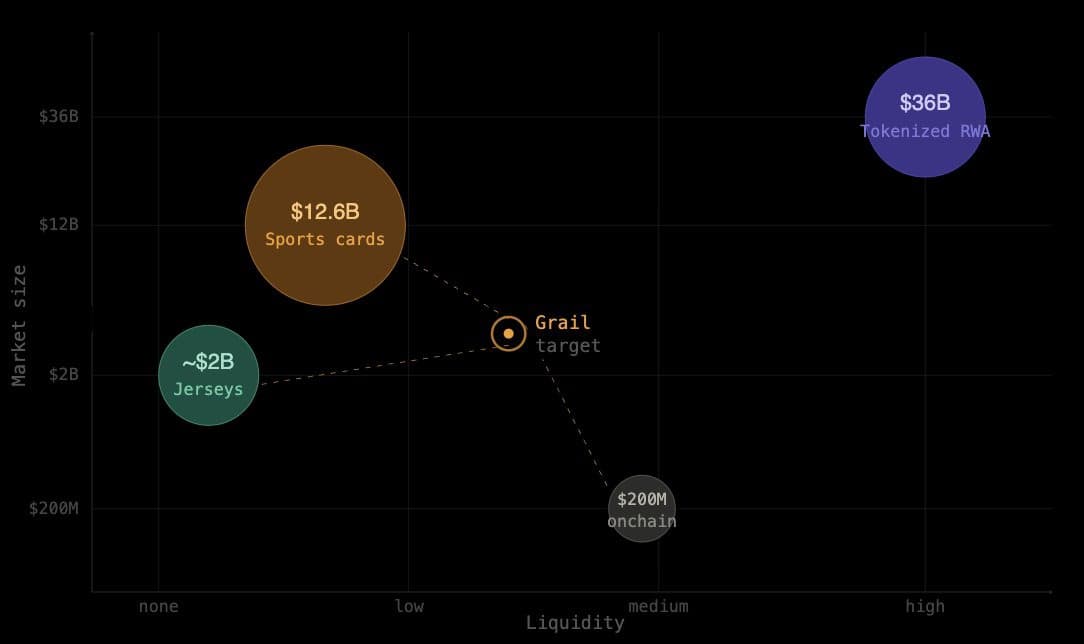
The sports collectibles market is $12 billion, growing fast, and almost entirely illiquid. Tokenization is the obvious fix.
The problem nobody solved
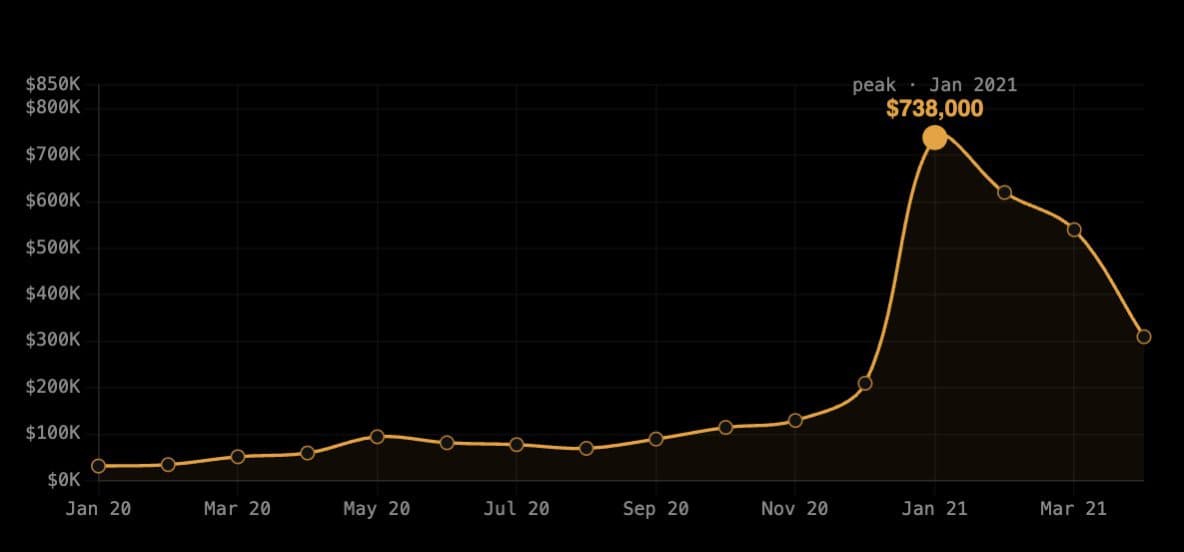
There is a 1986 Fleer Michael Jordan rookie card graded PSA 10 — perfect corners, perfect centering, perfect surface — sitting in a collector's safe right now worth somewhere between $200,000 and $300,000.
To sell it, the collector has two options.
Option one: consign it to an auction house. Wait 30–60 days for the cycle. Pay 15–20% in seller fees. Hope the right buyer shows up on the right day. Receive payment 14 days after the hammer falls.
Option two: list it privately. Wait for a buyer willing to wire $250,000 to a stranger for a piece of cardboard. Negotiate blind because there is no real-time price feed. Ship insured, cross fingers.
This is a $12 billion market operating with the liquidity infrastructure of a 1994 flea market. And it is not just cards — the game-worn jersey market, the signed memorabilia market, every physical collectible asset class shares the same structural problem.
The asset is real, the value is real, the liquidity is not.
Why collectibles became an asset class
This is not a niche hobby story. Three forces converged over the past five years to turn sports collectibles into a serious alternative asset class.
Generational wealth rotation
65% of card collectors today are aged 18–35.[1] For this cohort, a PSA 10 LeBron James rookie is as legible a store of value as gold — more culturally resonant, more personally meaningful, and in recent history, more profitable. The PWCC 100 Index, which tracks the 100 most valuable frequently traded cards, has returned 313% since 2008 — more than double the S&P 500 over the same period. That outperformance is real, but concentrated: it lives almost entirely at the trophy-card level, which is exactly where PSA 10 gem-mint grades matter most.
Supply-side scarcity engineering
Gem rates — the percentage of cards that achieve a perfect PSA 10 grade — run 1–5% for marquee cards. The 1986 Fleer Jordan has a 1.2% gem rate. 326 PSA 10s exist out of 28,300 ever graded. The 1954 Topps Hank Aaron PSA 10 has exactly two known copies. Scarcity this quantifiable is rare in any asset class.
Authentication infrastructure matured
PSA processed 15.3 million card submissions in 2024 alone, up 16% year-over-year.[2] MeiGray developed pre-game inventory tagging for jerseys — counterfeit-proof tags sewn in before the player dresses, with photo-matching via Getty Images to specific game action. For the first time, the provenance of physical collectibles is as verifiable as a blockchain transaction.
The failed first wave
The obvious answer — fractional ownership — was tried. Between 2018 and 2022, a wave of platforms raised venture capital and promised to unlock collectibles liquidity. Every single one failed or is failing.
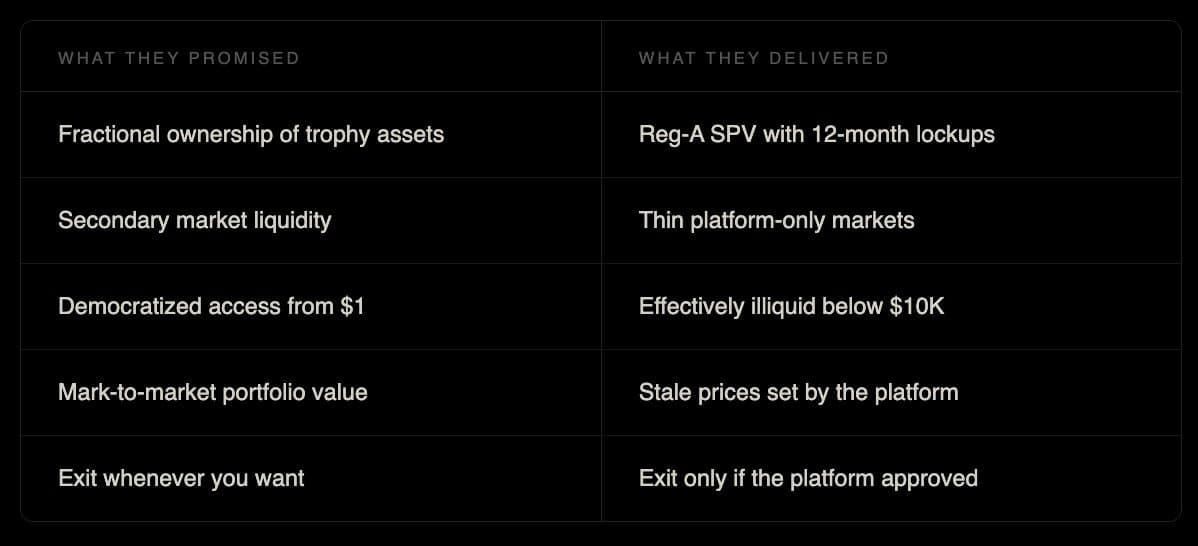
Otis was acquired in a fire sale by Public.com. Collectable collapsed — a single buyer took the assets, shareholders got nothing. Rally is effectively dead, most cards listed above real-world comps with no mechanism to correct. Dibbs shut down in March 2023.
The failure mode was structural, not executional. All of them used Reg-A or Reg-D securities frameworks that treated each card as a share in an SPV. This created broker-dealer requirements, KYC overhead, lockup periods, and, most fatally, platform dependency. When the platform died, the assets became inaccessible. Shareholders had no recourse because they did not own the card. They owned shares in a company that owned the card.
The platform cannot be the bottleneck. If a holder cannot independently redeem the underlying asset without the platform's cooperation, the structure is broken from the start.
The right architecture
The correct solution is not fractional ownership. It is tokenization with a different property: the token is a direct, arbitrage-redeemable claim on the underlying asset, tradeable on open infrastructure that exists independent of any single company.
This is what PAX Gold does for gold. One PAXG token equals one fine troy ounce of LBMA-allocated gold in a Brink's vault. If the token ever trades below the spot price of gold, anyone can buy tokens and redeem for physical — closing the gap through arbitrage. The token has tracked LBMA spot within 0.5% for years. The company that issued PAXG could disappear tomorrow and the redemption mechanism would still function.
Now apply this to a PSA 10 rookie card: the card goes into an insured, audited vault. ERC-20 tokens are minted against it on Base. The tokens trade on Uniswap against USDC. If the token price drops meaningfully below the card's real-world comp value, arbitrageurs buy tokens and redeem for the card. If it rises above, they mint new tokens. The price stays anchored to reality — not by trust, but by economic incentive.
This is the architecture GrailCo is building.
What has to go right
Vault trust
The entire system is a claim on a physical object. If that claim is not independently verifiable — Chainlink proof-of-reserve, named custodian, PSA cert numbers crosslinked on-chain — the token is worthless. This is not optional infrastructure. It is the product.
LP depth
The arbitrage mechanism only functions if there is enough liquidity in the Uniswap pool to absorb trades without slippage so wide the arb is never profitable. Thin pools mean the peg drifts. Deep pools make it tight. This is the hardest cold-start problem in the design.
Redemption user experience
A collector who burns their tokens needs their card in hand within 14 days, properly insured, in perfect condition. This is operationally unglamorous and the step where every crypto team wants to handwave. It cannot be handwaved. It is the trust anchor for the entire system.
Conclusion
Sports collectibles are already an asset class. The scarcity is quantifiable, the provenance is verifiable, and trophy-level cards have outperformed public markets over the long run. The only thing missing is the financial infrastructure to match.
Tokenization on public rails — not fractional SPVs, not platform-dependent custody — is the correct architecture. PAX Gold proved the model works for gold. The same model applied to PSA 10 rookie cards and MeiGray-authenticated game-worn jerseys is the next logical step.
The market is $12 billion, the RWA wave is $36 billion, the intersection is essentially untouched.
Building something interesting? We back founders shipping the next generation of crypto infrastructure.
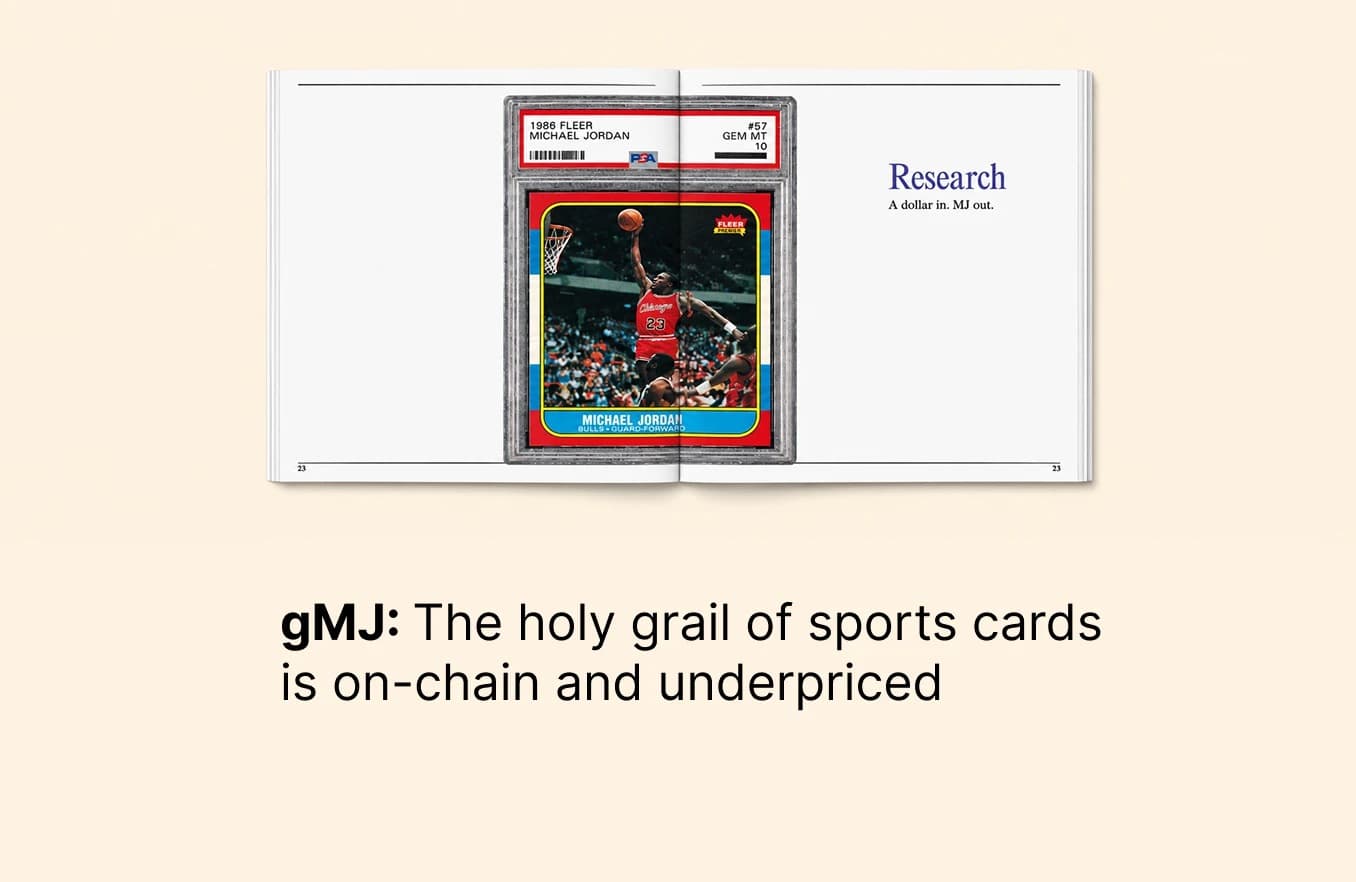
Work with us →gMJ: The holy grail of sports cards is on-chain and underpriced
The most iconic trading card ever printed now trades like a token 24 hours a day on Uniswap — and it sits at a 5–7% discount to its real-world price.
gSPEED: the first memecoin with a floor under it
Every SPEED token before this one is now worth a rounding error. gSPEED is different — each token is a fractional claim on a real, vaulted iShowSpeed PSA 10. A meme with a redemption floor.